The Chinese Physiological Society (CPS) was founded in 1926. The aim of CPS is to promote education and research in the physiological sciences by providing educational activities, scientific meeting and by actively joining the national and international scientific communities. The society publishes one journal, the Journal of Physiological Investigation (JPI), bimonthly per year in English.
Establishment of Chinese Physiological Society after World War I
In 1926, Robert Kho-Seng Lim (Robert KS Lim, 林可勝), with the support of Hsien Wu launched the Chinese Physiological Society in the Peking Union Medical College (PUMC). He invited seven well-known physiologists as honorary members of the Society to further facilitate scientific exchange. The establishment of Chinese Physiological Society provides an interactive platform to build strong connections with world-class elites, including J. J. Abeland and A. J. Carlson in the USA, E. Abderhalden in Germany, J. Bacroft, F. G. Hopkins, and E.S. Schafer in the U.K., and I.P. Pavlov in Russia.
Transformation of the Chinese Physiological Society during World War II
After the relaunch of the society, the presidents of the Chinese Physiological Society have undertaken tremendous efforts to maintain the integrity of the journal. To date, the presidents have been as follows: A. C. Liu (柳安昌) from 1959-70, H. S. Fang (方懷時) from 1970-73, C. Y. Chai (蔡作雍) from 1973-77, H. H. Lu (盧信祥) from 1977-81, S. T. Chiang from 1981-84, M. T. Peng from 1984-87, M. T. Lin (林茂村) from 1987-90, T. K. Young (楊志剛) from 1990-94, H. I. Chen (陳幸一) from 1994-96, P. S. Wang (王錫崗) from 1996-2000, T. H. Chiu (邱蔡賢) from 2000-02, Eminy H. Y. Lee (李小媛) from 2002-04, Y. T. Lau (樓迎統) from 2004-08, Julie H. Y. Chan (華瑜) from 2008-12, P. S. Hsieh (謝博軒) from 2012-16, S. J. Tsai (蔡少正) from 2016-20, Y. H. Lee (李怡萱) from 2020-22, J. C. Chen(陳景宗) from 2022-24 and K. Z. Lee (李昆澤) from 2024-present. In addition, the editor-in-chiefs of the Journal over the past few years have worked hard to improve the quality and promote its international standing, including A. C. Liu (柳安昌), C. Y. Chai (蔡作雍), S. T. Chiang (姜壽德), T. H. Chiu (邱蔡賢), T. C. Fu (傅祖慶), Shirley P. H. Li (李碧雪), P. S. Wang (王錫崗), Eminy H. Y. Lee (李小媛), P. S. Hsieh (謝博軒) and S. J. Tsai (蔡少正). As documented above, the visionaries who founded Chinese Physiological Society realized that physiology was an emerging field with broad applications. Recent development in new approaches, including molecular and cellular tools, has been widely utilized in physiological studies. In addition, rapid development of bioinformatic analysis and large-scale analysis of genomes and proteomes provides new ways of exploring a new field of systems biology to our future physiologists. In response to changes in the international situation and journal publication practices, the Chinese Journal of Physiology initiated a rename at the end of 2022. Under the supervision of the journal's executive committee and driven by the renaming committee, the board of directors voted to change the English name of the journal to the Journal of Physiological Investigation (JPI). Former president S. J. Tsai (蔡少正) was appointed as the inaugural editor-in-chief of the new journal, which published its first issue in the first quarter of 2024.
Since it has been recognized that by becoming cognizant of the history and impact of critical technology and knowledge individuals will be able to make better use of such things, it is necessary to understand how the subject of physiology has evolved and how we can best determine the next step in the related studies. Therefore, it is hoped that this special issue may function as a bridge to connect physiologists in Taiwan with those in the wider world, and provide better communication in the field to enable new developments in Physiology and aid professional networking.
The history is adapted and modified from A 90-YEAR HISTORY of THE CHINESE PHYSIOLOGICAL SOCIETY by Mei-Ling Tsai, PhD
Department of Physiology,
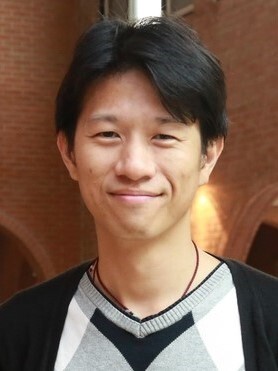
Professor Lee, Kun-Ze
 |
The Department of Biological Sciences of National Sun Yat-sen University
Respiratory Neurophysiology, Spinal Cord Injury Medicine, Neuroscience
|
Publications
- Ren MY, Liou LM, Vinit S, Lee KZ*. Position effect of trans-spinal magnetic stimulation on diaphragmatic motor evoked potential in healthy humans. J. Appl. Physiol. 133(5): 1042-1054, 2022.
- Lee KZ*. Neuropathology of distinct diaphragm areas following mid-cervical spinal cord contusion in the rat. Spine J. 22(10): 1726-1741, 2022.
- Lee KZ*, Liou LM, Vinit S, Ren MY. Rostral-caudal effect of cervical magnetic stimulation on the diaphragm motor evoked potential following cervical spinal cord contusion in the rat. J Neurotrauma. 39(9-10): 683-700, 2022.
- Lee KZ*, Liou LM, Vinit S. Diaphragm motor evoked potential induced by cervical magnetic stimulation following cervical spinal cord contusion in the rat. J Neurotrauma. 38(15): 2122-2140, 2021.
- Lin MT, Vinit S, Lee KZ*. Functional role of carbon dioxide on intermittent hypoxia induced respiratory response following mid-cervical contusion in the rat. Exp. Neurol. 339: 113610, 2021.
- Wu MJ, Vinit S, Chen CL, Lee KZ*. 5-HT7 receptor inhibition transiently improves respiratory function following daily acute intermittent hypercapnic-hypoxia in rats with chronic mid-cervical spinal cord contusion. Neurorehabil. Neural. Repair. 34(4): 333-343, 2020.
CPS 28 Directors & Supervisors
Directors: Kun-Ze Lee, Linda Chia-Hui Yu, Cheng-Chang Lien, Yi-Hsuan Lee, Alice Y. W. Chang, Chi-Chang Juan, Hui-Ching Lin, Tzong-Shyuan Lee, Shang-Hsun Yang, Ching-Hao Li, Kun-Ruey Shieh, Joshua Ho, Ho Lin, Juu-Chin Lu, Steve Leu
Supervisors: Po-Shiuan Hsieh, Shaw-Jenq Tsai, Ming-Jer Tang, Jinn-Chyuan Sheu, Wen-Lung Ma
Secretary general: Ya-Tin Lin